Anatomy of a cover: The Weight of a Human Heart
When it came to the choosing of a suitable front cover for his new short story collection, The Weight of a Human Heart, Australian author Ryan O’Neill had a more eventful time than most. Over the course of many months, nine covers were considered before both O’Neill and his publisher Black Inc. settled on their final choice, with constant communication throughout. Here, for the first time, are all nine covers, with thoughts and reflections from the author.

1. The first design for The Weight of a Human Heart was a very bold and confronting one, taking the title of the book literally and parading it in vivid colours. It brought extreme reactions from those I showed it to. For every person who loved it, there was another who strongly disliked it.
While I appreciated the audacity of the cover, and the placement and design of the title, I was unsure about using a human heart. The title of my collection refers to the average weight of a paperback book, and I was hoping books might somehow be referenced in the cover, as these play an integral part in several stories.

2. After voicing these concerns to Denise, my editor at Black Inc., the second version of the ‘Heart’ cover arrived. I admired the layout and typography of this design, and I preferred the heart fading to the background, but I still wasn’t sure about the use of the heart itself. Once more, Denise and I discussed what we wanted to see in the cover, eventually deciding to move away from the use of a literal human heart, as it had proved so divisive.
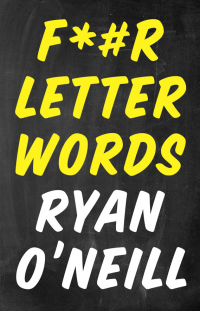
3. Although we had settled on ‘The Weight of a Human Heart’ for the title, the designer, using an alternative title, ‘Four Letter Words’, created a different cover. I thought this was a wonderful design. The blackboard motif spoke directly to the many stories in the collection that featured teachers, and the title design was playful and clever. Briefly, I even considered changing the title of the collection just so we could use this cover. But we decided to go ahead with the original title.

4. This cover seemed ideal for a book full of characters obsessed with words and writing and books. There was even a paper heart, which was perfectly matched to the title, and the title itself was designed in an elegant font. On reflection, I thought we might need to focus on the heart a little more, otherwise most of the cover would be taken up with other organs, but I believed that, with some tinkering, this would be a fantastic choice. And yet, stylish and clever as the cover was, it was perhaps not colourful or vibrant enough. We decided that it wouldn’t stand out in the crowded bookshelves of a shop, or lend itself well to being reduced so as to be used in advertisements and so on.

5. At this point, some months had passed since the first cover design and time was running short. This particular cover was a surprising change of direction. In fact, unbeknownst to me, a different designer created it. It was quirky and slyly humorous, and was perfectly suited to some of the stories in the collection, especially the first. But, for me, it just didn’t ‘feel’ like my book.
Denise and I then had a final discussion prior to the last round of designs. A decision had to be made soon to keep the publication of the book on track.

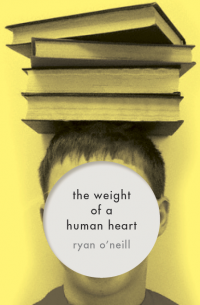
6, 7. Before the email arrived with the final four designs I had convinced myself that I would not get a cover that I loved. I knew, of course, that any final design we selected would be very good, but I had come to doubt we would find a perfect cover, and worse, that this would not be because it didn’t exist, but because I was too difficult to please. I expected I would have to compromise, and I was happy to do so, as Black Inc. had compromised so much with me in the previous months. Still, it was with some trepidation that I opened the email containing the last designs. Within a second or two, I knew I had found the perfect cover. Before talking about the final choice, I’ll say a few words about the others.
The first cover was obviously a variation on the theme of the preceding cover. I still admired the title design, and while this cover appealed to me more than the last one, I still felt it belonged to another book. In fact, if I ever write a memoir, I think it would be the perfect cover for that.
Still, I would have been content with that cover, as I would have been with the second cover, which returned, in a less confronting way, to the human heart motif we had looked at months earlier. I thought this was an attractive cover, and again I loved the typography, but once more I felt it didn’t quite capture the themes of my book.


8, 9. The last two covers obviously share the idea of crumpled paper, and while I liked the starkness of the black cover, it was perhaps a little too bleak. But as soon as I saw the last cover, I thought, ‘That’s my book.’ The colours were more inviting than the black cover, and the symbol of the discarded paper perfectly applied to many of the stories. Also, in my eyes at least, the paper resembled a human heart.
I’d like to take this chance to thank Black Inc.’s Tom Deverall and Peter Long, the two hugely talented cover designers, for their intelligent, original and stunning designs, any one of which would have made a great book cover. I’d also like to thank Denise O’Dea and Black Inc., for allowing someone who can barely draw a circle freehand so much input into the cover design. It’s a lucky writer who can say that they don’t mind at all if their book is judged by its cover.
Image credits:
Thomas Deverall: Images 1,2,3,4
Peter Long: Images 5,6,7,8,9
For more information on The Weight of a Human Heart, see the Black Inc. website. You can also see how the UK cover of the book here.