Film
‘You transfix me, quite’: late thoughts on Jane Eyre
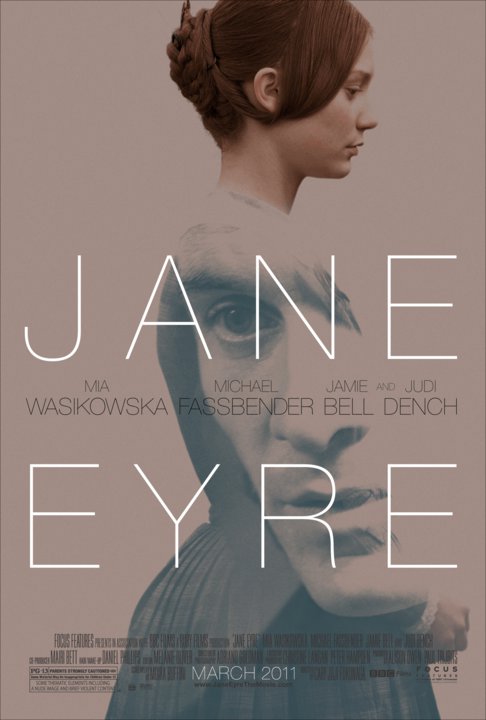
The transposition of a novel to screen always has an odd effect, like seeing a painted portrait move. There’s the vexed question of whether to judge the film on its own merits or in the fidelity to which it accurately translates the essence of the tale, especially one as well loved and well known as a Bronte novel. Cary Fukunaga’s adaptation cleverly works around this problem of familiarity by beginning in medias res and telling the story through flashbacks – giving a disorienting newness to a familiar tale.
What filmic translations of period novels do particularly well is evoke a sense of an era – more potently perhaps than we could ever achieve alone – with sumptuous costumes and period setting. Fukunaga’s film does this beautifully, all wuthering moors and chiaroscuro interiors.
To condense a novel down to film means we necessarily lose parts of the work – but this adaptation feels at times like a SparkNotes guide. Many of the most important scenes are hurried. Though the film lingers on shadowy rooms and lots of running across moors in billowing capes, all the most important moments in the plot – especially those between Jane and Rochester – are too fleeting.
Rochester is that particular breed of smouldering alpha-male – strong, brooding, looks fantastic on a horse – who would be awful if he were your actual boyfriend, but great in prose form. What makes him attractive is a passionate, fiery intensity. Yet there is a distinct lack of passion between the two leads (something of a cinematic feat considering Rochester is played by Michael Fassbender). The famous proposal scene – a culmination of hundreds of pages of yearning in the novel – when it occurs here, evokes more a reaction of surprise than romantic catharsis.
It is the nature of the medium that a film cannot portray interiority as effectively as a novel – but this is a story entirely about interiority. Though Jane and Rochester barely speak, their romance smoulders away in the novel for hundreds of pages.
Yet to reduce the book to just two hours, and focus only on exteriority, means that certain truths in the plot become more apparent, placed as they are upon the barest of cinematic bones. Perhaps unintentionally, this film reveals a truth about the story better than the novel itself.
One of the fascinating things about Jane Eyre – both novel and film – is the way in which Jane is irresistibly attractive to the men she comes into contact with as an adult. She receives proposals from both Rochester and St John Rivers, but she does and says very little (and she sure as hell isn’t winning them over with her hairstyle).
Jane and Rochester actually have very little contact in the novel. Rochester knows almost nothing about Jane – but in the end, he loves her precisely because he doesn’t really know anything about her at all.
What Jane does that is so alluring, it seems to me, is to simply be a mirror for every man she comes into contact with. She has an uncanny ability to reflect back to men the best version of themselves. Jane isn’t a ‘machine without feelings’ but she is as cool and glassy as a mirrored surface. Rochester is indeed ‘transfixed’ by Jane, but it is his own image he is transfixed by.
This makes Rochester’s blindness all the more brilliantly and sadistically ironic, as he now must rely wholly on Jane’s sight. He is quite literally transfixed by her – existing forever within her perception.
Jane Eyre is, in many ways, a flawed film. But this small aspect – however unintentional – made it a rather illuminating translation of the work.
– Bethanie Blanchard is a Melbourne writer and literature PhD candidate at the University of Melbourne.


12:03 pm, September 22, 2011
I liked this article (and I liked the film too actually) especially your comments about Jane’s reflective nature. I was struck by that too when St John claims that they are exactly alike when clearly they share very little in common. It wasn’t something I remember noticing so much in the book, probably because there you had the hundreds of pages of jane’s thoughts and feelings to “distract” (for want of a better word) you.
I do disagree about the lack of smoulder between Jane and Mr Rochester though. Come on! At the end! The amazing transformation of Mr Rochester into Hottest Hipster circa 1849? Yowza.
12:24 pm, September 22, 2011
It’s funny, I saw this first at the Film Festival, and enjoyed it but wasn’t blown away. But upon a second viewing, having re-read the book in the interim, I really liked it a lot. The thing is, most of the build up to that famous proposal scene is in Jane’s head. She alludes to conversations between her and Rochester, but you don’t hear very many directly. I think even in the book it’s a surprise when he proposes, from Jane’s perspective at least. It’s hard to separate our knowledge and expectations of this novel and romance novel in general, from Jane’s character.
Anyway, I remember thinking in my first viewing of this film, during the bed-on-fire scene, ‘oh sif she hangs around in his room and they have word-sex like that, pff stupid Hollywood’ but then I re-read and, well, it’s pretty accurate to the spirit of the scene. I think I forgot just how much sex there is in the book. Not explicit, but still tangibly there, again and again.
And it is a beautiful adaptation, a beautiful film. You fall in love with Thornfield, which is important.
Oh, but last point, in both screenings I attended, almost the entire audience gasped when the shot of Thornfield burned down came on screen. AND when it was revealed that Rochester is already married. WHO ARE YOU PEOPLE WHO DO NOT KNOW THE MOST WELL-KNOWN PLOT TWIST IN THE HISTORY OF THE WESTERN WORLD!?!?
End rant.
12:57 pm, September 22, 2011
What a wonderfully leaden article. Sure, it’s not quite as bad as the unbelievably laboured piece in the first issue on ‘The Wire’, but, really, KYD editors what were you thinking here?!?
‘A rather illuminating translation.’ Sigh.
What does the ‘rather’ add to this sentence apart from…unnecessary length? ‘Cool and glassy as a mirrored surface’ (i.e. as a MIRROR, perhaps the very same mirror which was mentioned two lines earlier and which haunts this review like a laboured simile…)
Worst of all, why is ‘transfixed’ in scare-quotes if the comparison is meant LITERALLY? I mean, you’re saying ‘he was transfixed’ (for the second time). But this time, apparently, you mean it literally. (Or, rather, ‘quite literally’) But, no, it has to be ‘transfixed’ as if the reader were in danger of taking something avowedly literal as if it were…er… literal.
Sleeping editors is the dominant motif here, i.e. the editors were, quite literally, “asleep”. [sic]
11:02 pm, September 22, 2011
Hello Alberto,
By way of introduction, I’m the Online Editor at KYD.
Thanks for your comments.
I disagree with you about ‘rather’ being superfluous in ‘a rather illuminating translation’. It’s clear that the author has reservations about whether this iteration of Jane Eyre is insightful, and she uses ‘rather’ to modify ‘illuminating’ – that is, it’s only illuminating to a certain degree.
I appreciate that you find the repetition in ‘mirror’/’mirrored surface’ unnecessary, but again, I disagree with you. By suggesting that Jane is ‘cool and glassy as a mirrored surface’, the author is elaborating on why she is comparing Jane to a mirror, and strengthening the comparison – Jane is not only reflective, but also calm and inert.
I do agree with you that ‘transfixed’ should be taken out of quotation marks in its final appearance here – an oversight on my part. I’ve now made this change.
Thank you for reading. We welcome further constructive comment at Killings as long as it is respectful.
7:01 am, September 23, 2011
You say that “Rochester knows almost nothing about Jane – but in the end, he loves her precisely because he doesn’t really know anything about her at all”.
Surely the whole point of the attraction is loving Jane’s character and personality regardless of facts about her past? Rochester tells Jane that it is her spirit, will and energy and purity that he wants not just her brittle frame.
9:42 am, September 23, 2011
Alberto – thanks for your comments. Estelle has addressed many of your concerns, but to go some way to explaining my own choices in this piece:
The ‘rather’ in ‘rather illuminating translation’ was not intended for unnecessary length but to qualify ‘illuminating translation’.
‘Transfixed’ was not scare-quoted, it was simply a direct quote from Rochester in the film (used in the title of this piece). The marks were a citation – standard practice for direct quotes from sources.
10:09 am, September 23, 2011
Thanks Kate and Zora. I’m still not convinced about the smoulder! However, this section is very, very smouldery: http://www.youtube.com/watch?v=Z7_uNOTpG5Y
It is indeed a very beautiful film – it actually reminded me a lot of Campion’s ‘Bright Star’ – even the score was similar. The film felt to me like a portrait – beautiful to look at but lacking interiority. As you say Kate, without the hundreds of pages of Jane’s thoughts and yearning, the romantic outcomes feel strange and unexpected.
Ha Zora I agree it’s such a well-known plot twist – but that’s why I felt Fukunaga’s decision to begin toward the end and tell the story through flashbacks was so clever. Maybe it just worked TOO well on that audience?!
5:10 pm, September 23, 2011
I too found it quite reminiscent of ‘Bright Star’. ‘Jane Eyre’ is obviously a greater work in its totality, a greater story, but for my money ‘Bright Star’ is a much more successful film – probably because it was based on a biography, not adapted from a novel, and thus didn’t have to figure out how to do without hundreds of pages of interior insight.
Having said that, I did enjoy Fukunaga’s ‘Jane Eyre’. And I disagree with you about the smouldering.